Written by: Kasarachi Onwuliri
What if every month felt like a battle against your own body? For millions of women, uterine fibroids mean chronic pain, heavy bleeding and difficult choices about their reproductive health. So what are uterine fibroids? Here is a brief video from the FDA.
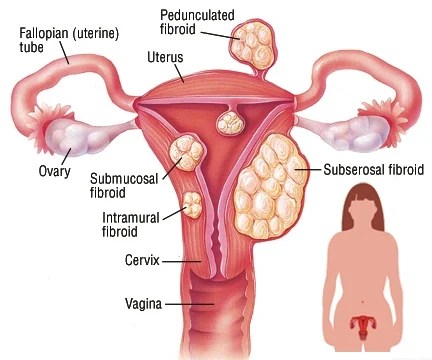
Despite the prevalence of this condition, research and treatment disparities continue to persist. According to a study published by The National Library of Medicine 80% of black women will be diagnosed with fibroids by age 50. Black women are also generally younger when developing fibroids than there white counter parts with the average age being in there mid to late 20’s while the national average being between late 30’s to 40’s. Studies have also shown that black women experience larger and more numerous growths. The question is why? Researchers still haven’t answered this question. It is a known fact that black women face disparages when it comes to treatment in the medical care. According to a Pew Research Center study Black Americans and mistrust of the U.S. health care system and medical research 55% of African American’s said they have negative experiences with doctors while black women are 58% more likely to believe the medical system is designed to hold black people back.
There are many treatments when it comes to fibroid care according to the Mayo Clinic:
Hormonal therapy: Low-dose birth control pills, gonadotropin-releasing hormone agonists (GnRH agonists), and antihormonal agents can help with symptoms, bleeding, and fibroid growth.
Uterine artery embolization: Injects particles into the arteries that supply blood to the uterus, cutting off blood flow to the fibroids.
the most common treatments are:
Hysterectomy: Removes the uterus, which cures heavy menstrual bleeding and most other fibroid symptoms
Myomectomy: Removes fibroids, but may cause scarring that can lead to infertility
Although these solutions exist many black when struggle to receive adequate healthcare. A study conducted by the Commonwealth Fund Achieving Racial and Ethnic Equality in U.S. Health Care Shows the disparages in treatment provided by healthcare. Compared to their White counterparts on average Black Americans scored second behind American Indian and Alaska Native’s when it comes to lack of medical care from health.
Figure 1.

Due to this, the call for medical attention when it comes to black women and fibroids can be over looked.
I spoke with three different women who have each had a unique experience with fibroids. Adanze Onwuliri (32), Angela Hannah (58), and Lindi Porter (27).
Adanze Onwuliri who also happens to be my older sister is a pharmaceutical sales rep who has been dealt with the effects of fibroids for the past 2 years. In my interview she details how the effects of fibroids altered her work an personal life. “it effected me because I have to drive a lot and fly a lot for work….I wasn’t able to go to my office because I was cramping so bad.”
Angela Hannah a mother of two is a server at the Georgia Tech Hotel and Conference Center. She recalls her experience with fibroids over 10 years ago at age 40. “I was just bleeding so heavily…it eventually led to my hysterectomy.”
Lindi Porter is a new stay at home mom to 4 month old Noah. She discribes her experience with discovering she has fibroids 6 months into her pregnancy. “I had probably been to the doctor three times at that point then she says whop it seems like you had a fibroid but since it won’t effect the pregnancy theres no urgency to remove it.” Now that she is four month post-partum the doctors have not made any mention of removal.
Uterine fibroids can be a debilitating experience for women on a monthly or even daily basis. The burden of fibroids on Black women is undeniable, yet too often, their pain is dismissed, their concerns ignored, and their treatment options limited. Addressing this crisis requires more research, more advocacy, and most importantly a healthcare system that listens. Until then, Black women will continue to fight not just for their health but to be heard.
 Site Title
Leave a comment